After sunset, landscaping loses its shape and patios fade into darkness. Moonlighting and floodlighting are two incredible lighting methods that brighten yards. However, they serve two distinct purposes. Learn about how each technique illuminates outdoor spaces for design and security goals.
Moonlighting
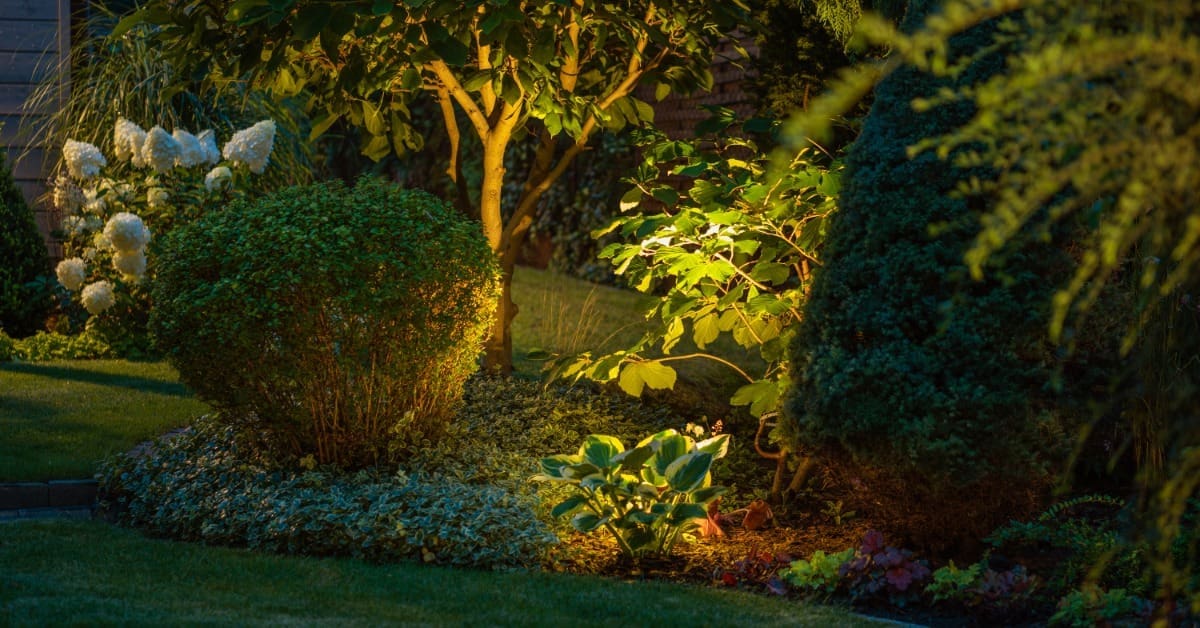
Moonlighting recreates the quiet wash of natural moonlight. By placing fixtures high in trees or elevated architectural points, the light falls downward through limbs and leaves. Shadows break across the ground in soft, irregular patterns.
Instead of making a fixture the focus, this method reveals bark texture and planting depth. It suits properties with mature trees or patios meant to hold a calm evening presence.
A strong moonlighting design begins with structure. Open branches spread light widely. Dense foliage produces deeper shadow pockets. The designer studies the tree before fixture placement because the best position depends on both the tree and the space below it.
Common Light Fixtures
Moonlighting uses downlights mounted above the viewing area. These fixtures typically have shields, recessed lamps, or glare guards to disguise the bulb.
Beam spread shapes the finished image. A narrow beam highlights a small garden bench. Using a wide beam is ideal to cover a broad seating zone from a high position or a section of the lawn.
Smart Light Placement for Natural Results
There are several factors to consider when installing lights, from the number of fixtures to the installation strategy. Not every element in the yard needs a downlight for a moonlighting effect. Too many fixtures will overwhelm the yard instead of establishing a subtle, calming glow. The design should guide the eye between soft light and shadow at a comfortable pace.
Aiming determines the result. The lights should land across patios, steps, or gathering areas used after dark. Well-aimed moonlighting makes the space readable at night while keeping the source quiet.
For installation, hardware has to account for bark growth, branch movement, and cable protection. A skilled designer treats the tree as part of the living landscape for a long-lasting result.
Why Moonlighting Suits Refined Landscapes
Moonlighting offers outdoor spaces existing character by softening hardscape materials and enhancing the depth of the foliage. The effect feels familiar because the light behaves like a natural overhead glow.
Tree trunks remain dimensional after dark because they’re shaped by a gentle overhead light. A garden terrace or wooded patio gains atmosphere without losing its quiet character. For homes with subtle designs, moonlighting is a beautiful technique.
Floodlighting
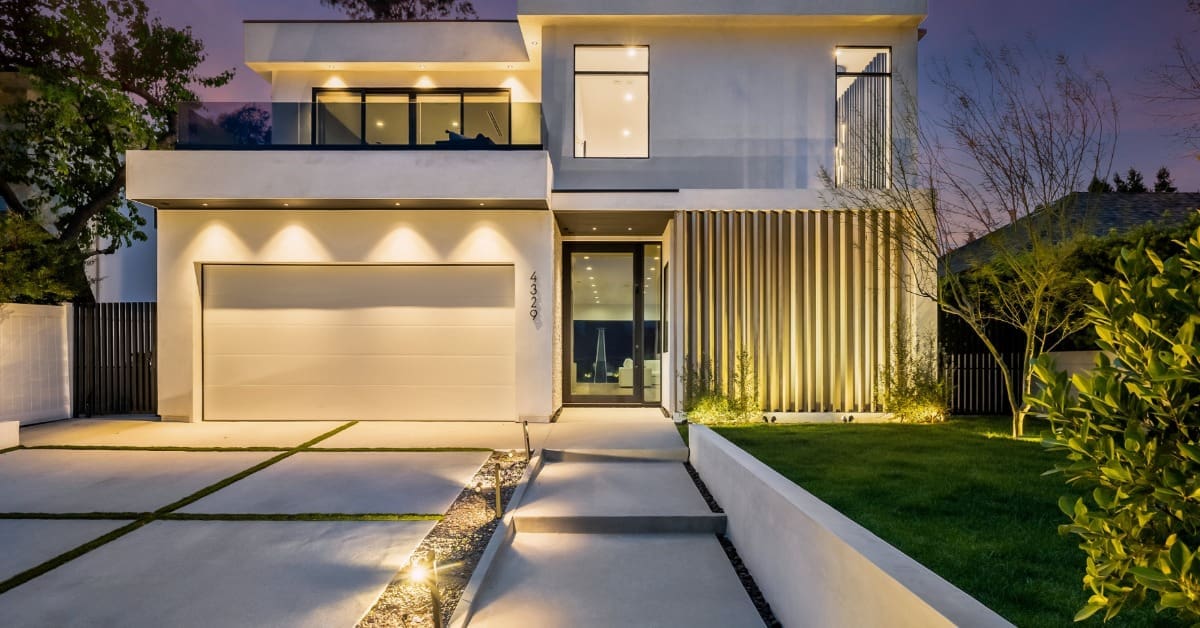
Floodlighting uses broad beams to illuminate large areas with direct coverage. Instead of filtering through trees, the light projects from a fixture toward an open target zone. It works well across driveways, service areas, broad lawns, or commercial parking lots.
This practical lighting design improves visibility across spaces used to move, park, load, or gather after dark. The design challenge lies in shaping a wide beam, so it supports the property without washing everything in flat brightness.
Fixtures That Cast Wide Coverage
Floodlights use wide beam angles and high-output lamps. A fixture mounts on an eave, pole, wall, post, or ground stake, depending on the target area. Each mounting point changes the shadow pattern and the glare seen from nearby windows or seating areas.
The light effect appears stronger than moonlighting. Floodlighting brightens broad surfaces and reduces deep shadows in open areas. That strength makes fixture choice critical.
A small residential side yard takes a modest shielded floodlight. A long driveway entrance calls for several fixtures set at measured angles. A commercial parking lot requires a broader plan with even coverage and dependable placement.
Directed Coverage Without a Harsh Glare
Floodlighting should begin with a precise purpose. The designer should identify the exact area requiring coverage before choosing brightness, beam spread, or mounting height. A driveway apron calls for a different layout than a backyard play zone.
Poor floodlighting points one powerful fixture across a large scene. That approach creates glare near the source and dark edges beyond the beam. A refined plan uses measured output with thoughtful aiming. Proper shielding distributes light with control.
Controls make the system work with daily routines. Timers, dimmers, or photocells help the lighting respond to evening use without running at full intensity all night. Good control planning preserves the property’s appearance and reduces unnecessary brightness.
Why Floodlighting Works Well in Open Spaces
Floodlighting offers large areas dependable visibility. It supports evening movement in driveways, side yards, loading areas, or parking zones. The wide beam pattern works in spaces where narrow accent lights would leave dark gaps.
It serves large-scale architecture and landscape features. A broad beam reveals a tall facade, retaining wall, tree line, or lawn edge with enough coverage to make the feature read from a distance. The design should still respect the home’s character.
Floodlighting serves projects driven by function. Security lighting relies on coverage reaching beyond a single decorative point. The best floodlighting plan uses enough light to serve the job, then shapes the beam precisely.
Which Lighting Design Is the Best for Your Home?
The choice between moonlighting and floodlighting depends on what you want the space to accomplish after sunset. Moonlighting suits areas where atmosphere, texture, and natural shadow guide the experience around gardens and wooded patios.
Areas that require wide coverage, such as driveways and side yards, need broad beams. The floodlighting design still demands care because strong light without control flattens a property and causes glare.
Many high-end homes use both methods in separate zones. A backyard terrace relies on moonlighting to create a quiet evening mood. A driveway or service area relies on floodlighting to support movement after dark. The best plan assigns each method to the space it serves.
Expert Lighting Design Services From POL
A polished lighting plan comes from seeing the property in person, studying sightlines, and understanding how each outdoor area functions at night. Palmetto Outdoor Lighting brings exterior lighting design experience to high-end homes and commercial properties in the Charlotte area.
As an outdoor lighting installation company, POL considers every aspect of the design, from mounting height to glare control. Call our team today for a quick site survey and a high-quality installation.