Landscapes fade into the night after sunset. Whether you own a home or manage a storefront, the outdoor lights can highlight architectural features while creating a polished appearance. It can also improve visibility around entrances and walkways, supporting the safety of every guest.
Hiring a lighting company is the best way to ensure every light complements the landscape, but how do you know if they’re the right one? Asking these questions before hiring a landscape lighting designer will ensure every element is perfect for your property.
1. How Will I Know the Best Lighting Design?
When you look at entryways and foliage, you notice that the space is dark. But it’s tough to know where to place each type of fixture to brighten the area.
A strong lighting plan begins by evaluating the property in person. A designer should study the architecture and plantings before recommending fixtures.
This visit should feel like a casual conversation. The team should ask how people navigate the space and which accents you’d like to highlight. You can also bring up security concerns, so the lighting team will focus on specific dark spots. Every answer you provide will help the team devise a design that’s customized to your property’s characteristics.
2. What Types of Light Fixtures Do You Offer?
Looking a catalog of light fixtures won’t tell you much. A skilled designer knows the effect that each light has on the landscape. Once they have a good understanding of your property, they’ll match each fixture to the surface, route, feature, and viewing angle.
The best recommendation comes from understanding the effect each area deserves. While many light fixtures overlap for commercial and residential properties, there are certain fixtures and techniques that suit each one differently.
Commercial Light Fixtures
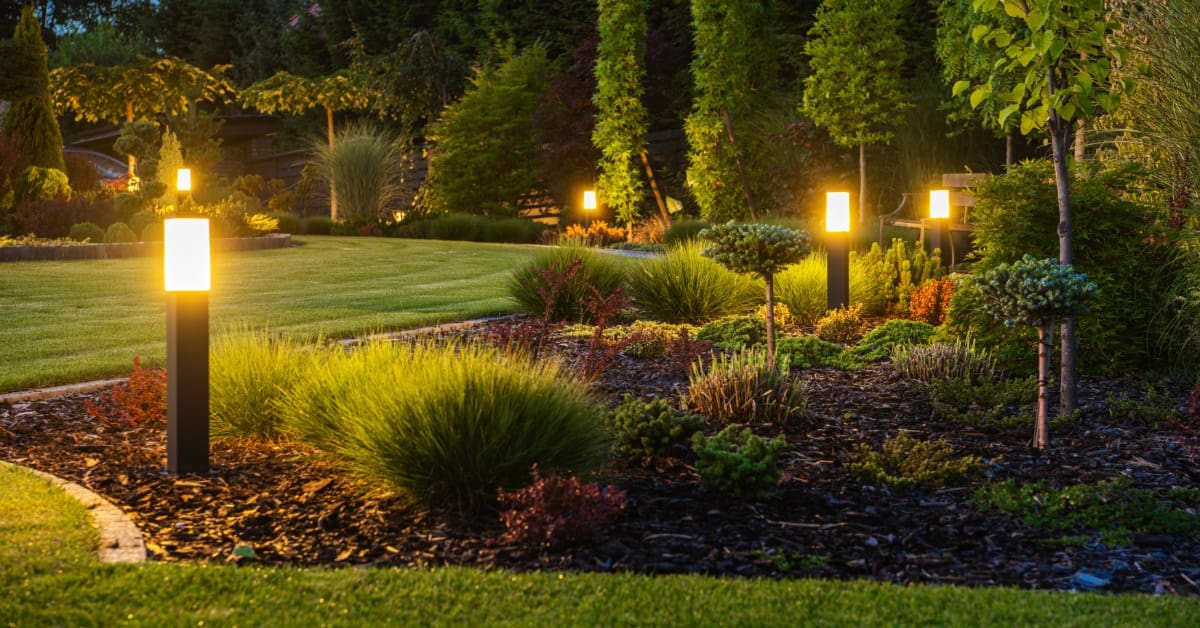
Commercial properties rely on lighting to guide guests and customers. Path lights are the baseline to define walking routes across courtyards or landscaped areas.
Accent lights are necessary to draw attention to signage, storefront details, and foliage. For some businesses, including motion-sensor lights is essential to increase security after hours.
Residential Light Fixtures
Residential lighting highlights texture and comfort. It can support evening use around outdoor living areas as well.
Step lights can make stairs easier to read after dark. Architectural lighting can bring out columns and stonework. Water feature lighting adds movement to ponds or fountains. Ultimately, the goal is to create a balanced design that supports daily use while preserving a comfortable outdoor atmosphere.

3. Is It Possible To Implement Smart Features?
Smart features are key to a convenient system. Instead of adjusting fixtures manually each evening, property owners rely on controls that manage each fixture automatically. Use timers to establish a dependable schedule and dimmers to adjust the brightness level in different areas.
Because every property has varying needs, a designer should explain how these controls fit into the lighting plan. The goal isn’t to add technology for its own sake. Rather, smart features should make the system easy to use while preserving the intended lighting effects. When planned correctly, the controls work in the background, so the setup isn’t a chore to maintain.
4. How Bright Will the Lights Be?
The brightness level depends on how each area functions after dark. Walkways and entrances need to guide movement, while patios and gathering spaces benefit from a soft glow that’s easy on the eyes.
A landscape lighting designer should explain how light output relates to each part of the property. Between 100 and 200 lumens per square foot is acceptable for most outdoor lighting projects. The key is to adjust the brightness level to match the intended use of each location, so the design is both practical and visually appealing.
5. What Color Temperature Fits the Space?
Color temperature plays a major role in how a property looks after sunset because it influences the appearance of materials and architectural details. Warm white light complements brick and stone because it establishes a welcoming atmosphere. Traditional homes and natural landscape features frequently benefit from this soft look.
Cool white light tends to pair well with modern architecture and metal finishes because it produces a sleek appearance. Many commercial properties also use cool tones to emphasize crisp lines and contemporary design elements.
Before installation begins, a designer should explain how different color temperatures will affect the finished result. The selected tone should work with the property’s existing colors and textures rather than compete with them.
Consistency throughout the design is also a major consideration. By implementing too many color temperatures, the lights become disjointed and distracting. An experienced designer chooses each tone with a clear purpose to establish a cohesive appearance.

6. How Will Installation Affect the Property?
While the lights’ output is an essential factor, the logistics of the installation process are extremely important. Ask how the team will route wiring and place fixtures.
Wire routes should support performance and future service access. Fixture placement should account for mowing and irrigation. Careful planning limits disruption and protects the finished appearance of the property. A clean finish reflects the same care as the design itself.
7. What Maintenance Is Needed for Fixtures?
Because fixtures remain exposed to moisture and heat, they must also withstand soil conditions and changing weather throughout the year. Durable construction helps protect the fixture body and lens while also safeguarding the internal components that keep the lights operating properly.
As you evaluate potential designers, ask which materials they use. The answer can reveal a great deal about the quality of the products being installed. Many high-quality fixtures will include these materials and construction methods:
- Fully potted drivers protect electrical parts from moisture. They also help manage heat inside the fixture, supporting long-term reliability.
- 316 stainless alloy resists corrosion in demanding outdoor settings. This material performs well in areas where moisture exposure is a concern.
- Borosilicate glass handles major temperature changes. Its durability protects the lens from shifting outdoor conditions.
When a designer selects strong fixtures from the start, the system is ready to perform no matter the weather. The outcome is light fixtures that demand minimal maintenance.
8. Will the Design Team Install the Lights?
Customers shouldn’t have to take one company’s design to a different installer. Miscommunication and a lighting design that you don’t approve of are likely to occur when you have to mix and match companies.
POL is an outdoor lighting service in Charlotte that handles the design process and installation. Customers work with the same team as ideas become a finished system. That continuity keeps the project organized and protects the design intent from the first site visit through the completed setup.
Create a Stunning Lighting Design With the Right Team
Asking outdoor lighting designers the right questions will streamline the hiring process. You’ll feel confident in how they communicate with customers, select fixtures, and ensure that the design complements the property’s unique features.
Palmetto Outdoor Lighting makes the next step simple. Reach out to discuss the project, and our team will conduct a property walk-through as soon as possible. You’ll receive a personalized lighting design and a tailored quote before installation begins. With one team guiding the process, the property will have every element it needs to shine bright at night.