Patios and plants look extravagant during the day. But when you’re hosting guests or unwinding outside after sunset, those features fall away. The backyard becomes full of dark corners, strange shadows, and an eerie ambience.
Lights erase the darkness. Uplights draw the eye up and shape landscaping and focal points. Downlights illuminate seating areas by positioning the lights up above. Find out how you can transform your backyard with a combination of uplighting and downlighting techniques.
Uplighting: Depth and Drama
Uplighting sends light upward from a fixture placed near the base of a feature. It adds height and sharpens the yard’s texture. This style works best when each fixture illuminates one element at a time.
Add Texture to the Architecture
Stone walls, columns, and exterior facades gain character under uplighting. Light aimed upward across prominent surfaces pulls out the details for a rich nighttime appearance. The approach style works especially well on homes with strong vertical lines, textured finishes, or standout entry features.
It helps to control the beam’s position. Too much brightness flattens the surface and produces a glare. An intentional uplight lets architectural details stand on their own.
Highlight Trees and Plants
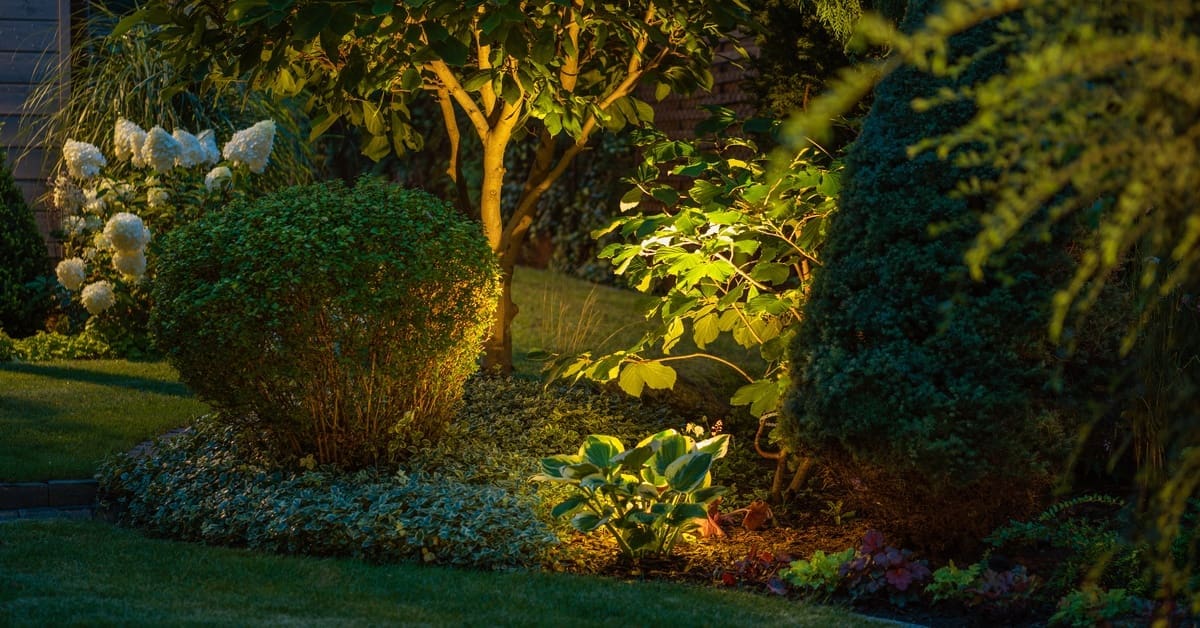
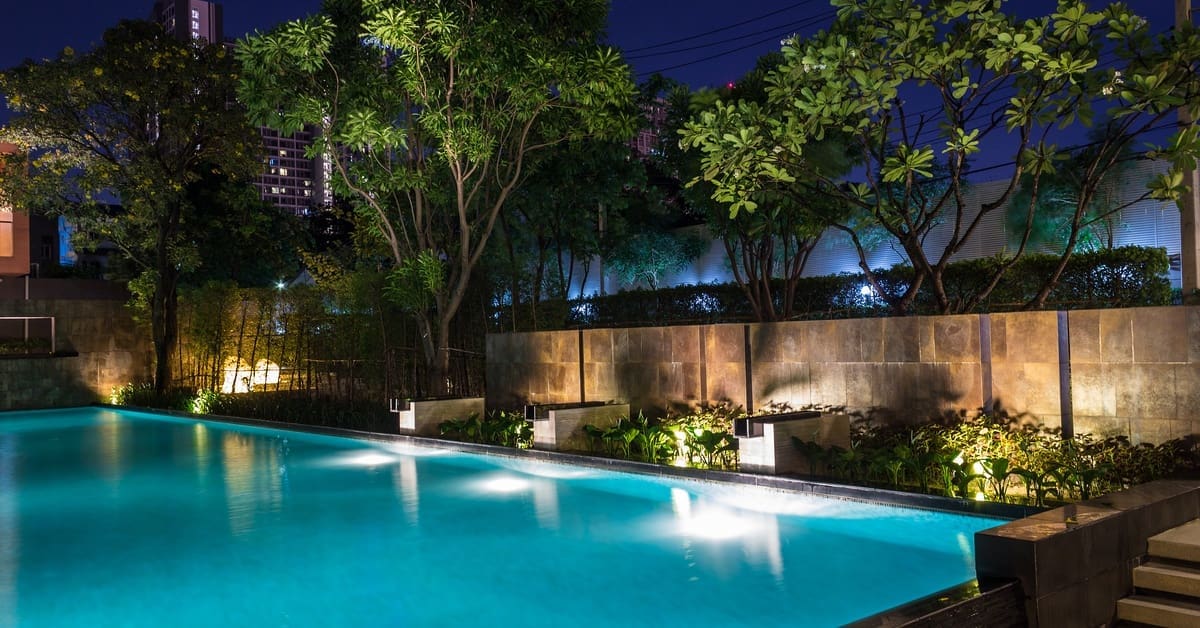
Beams travel beautifully through the branches, trunks, and leaves of trees. They pick up the rugged texture of bark and make the tall trunk stand out. Using a wide beam will brighten a full canopy, so it becomes a focal point of the yard.
Don’t forget about the shrubs and layered plant beds. Instead of disappearing into the dark, people can enjoy the greenery and definition of the plants amidst the darkness. Uplights bring out the plants’ color and structure without blasting the entire bed with harsh light.
Frame Focal Points
Numerous wide beams of light will detract from the yard’s subtle beauty. When positioning uplights, less is more. Instead of seeing random bright spots, people see a clear pattern that supports the property’s shape.
Think about which elements in the yard deserve to stand out. Whether it’s a fountain, a pergola, or a tree, the light will anchor the layout by naturally guiding people’s eyes. The result is a custom design that enhances the backyard’s ambience.
Pick the Right Uplights
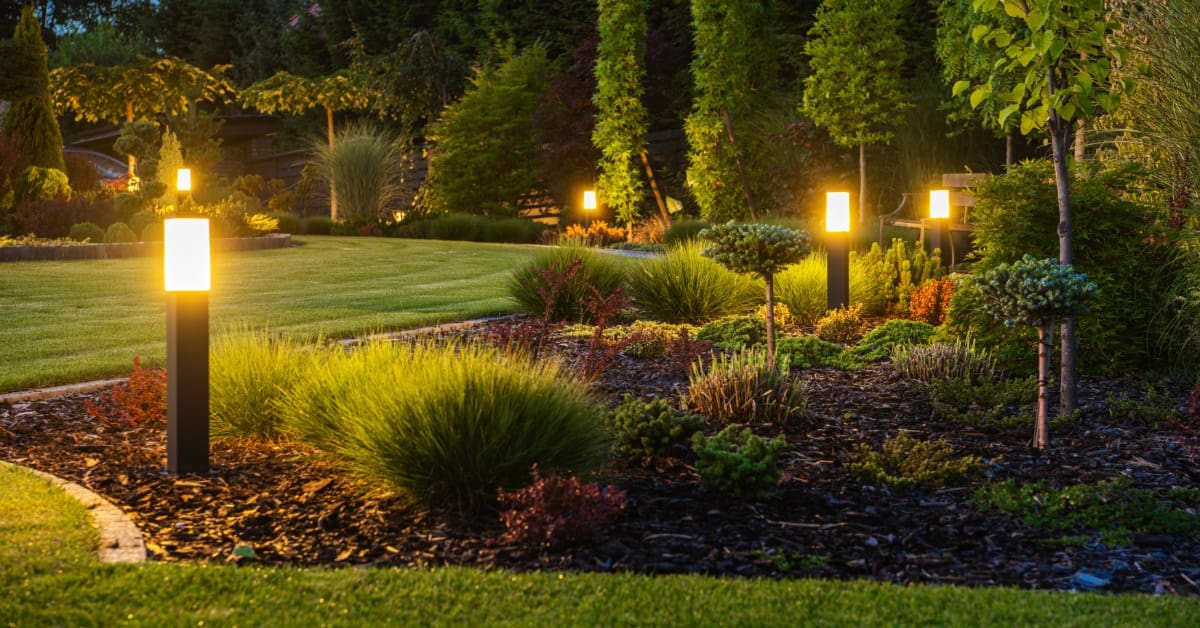
Every fixture produces a particular result. Spotlights create narrow beams for tree trunks, columns, or statues. Well lights sit flush with the ground and hide the fixture body; they’re great for walkways, lawn edges, and structured planting beds.
Adjustable fixtures help fine-tune the beam angle during installation. Instead of forcing one fixture into the yard, you can match the fixture to the feature.
Place Each Fixture Carefully
Placement shapes the final effect just as much as the fixture itself. A spotlight set too close to a wall can produce a hot spot. A fixture pushed too far from a tree may lose intensity before it reaches the canopy. Small shifts in distance and angle change the entire result.
An experienced installer tests beam spread, checks sightlines from the patio and back windows, and avoids direct glare. Their insights will result in a polished lighting design.
Downlighting: Soft Illumination
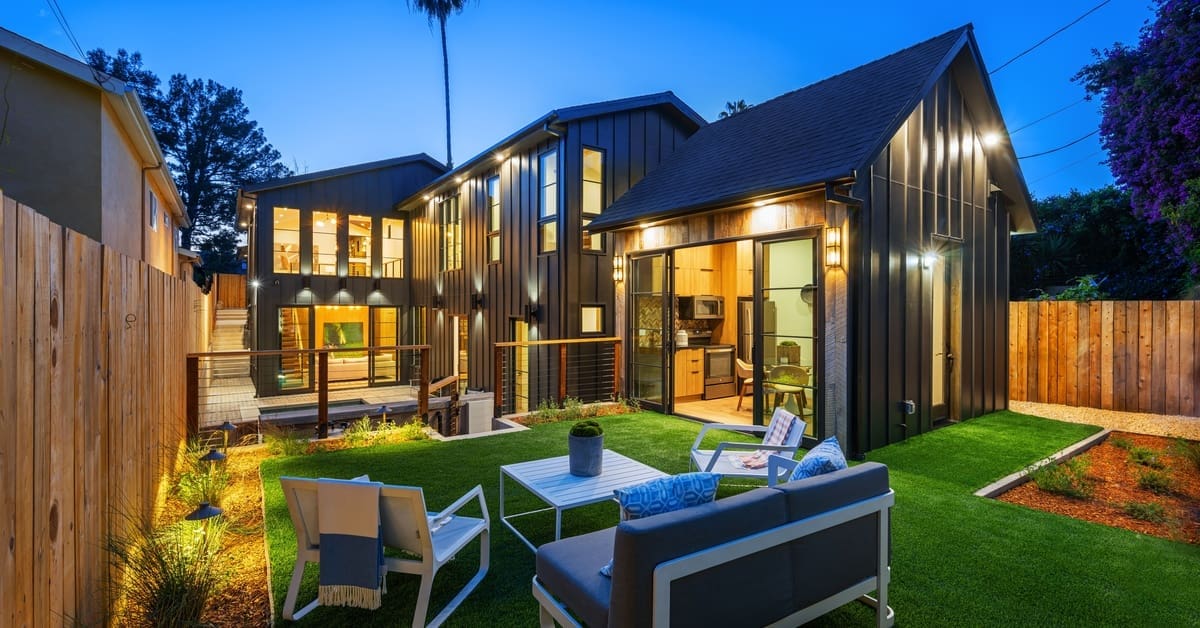
Downlighting sends light downward from an elevated point such as a tree, pergola, eave, or structure. It mimics the natural direction of light and gives outdoor areas a soft, usable glow. This style helps homeowners navigate the yard safely, enjoy gathering spaces, and admire the landscape.
Light Paths From Above
Path lighting doesn’t always need a row of fixtures lined up at ground level. Downlighting can wash a walkway with a gentle appearance. Mounted from a tree limb or the house, the fixture spreads light across the surface. People will be able to see changes in grade, steps, and edges with ease.
This approach reduces visual clutter around the path. It works especially well in backyards with stone walkways, pool decks, and garden routes that won’t benefit from a runway effect.
Improve Seating Area Usability
Patios and seating areas need light that supports conversation, dining, and movement. A soft pool of light over a table or lounge area makes the space functional long after dusk.
Downlighting works best when the beam focuses on a single activity zone. The light should reach chairs, steps, and surfaces without flooding the entire yard. Balanced illumination will create a comfortable outdoor living space that everyone will enjoy.
Strengthen Safety Around Entry Points
Rear doors, side gates, steps, and transitions between hardscape areas need clear visibility. Downlighting improves these spots by placing light where people naturally look as they move through the yard. It defines edges and reduces the guesswork that comes with dark stair treads or uneven surfaces.
This style can support safety without giving the home a harsh security-light look. A well-aimed fixture provides coverage and keeps the entry area readable. That’s especially helpful around decks, outdoor kitchens, and pool access points.
Find Fixtures for Ample Coverage
Just like uplights, there are multiple types of downlights to choose from. Bullet fixtures attached to eaves or beams target small activity zones. Tree-mounted fixtures are ideal when the branches have ample height and structure to support stable placement. As long as each fixture matches the mounting location and the area’s size, the backyard will look impeccable.
Blend Both Styles Together
There’s no need to choose either uplighting or downlighting to transform your backyard. A combination of the two will increase the yard’s depth and safety.
A homeowner might use uplighting to feature a large oak and the back facade, then use downlighting to brighten the patio and walkway. The mix creates a smooth visual rhythm for a beautiful backyard.
Create a Layered Lighting Design
A backyard shouldn’t disappear at night or force homeowners to rely on a few harsh fixtures near the door. With the right mix of uplighting and downlighting, the space gains structure.
POL offers residential lighting installation in Charlotte, NC, that prioritizes functional and aesthetic appeal. Call us today, and one of our team members will come out to your property as soon as possible. We’ll learn about your goals and provide suggestions for the best way to illuminate your backyard. With our help, you can start enjoying your backyard after sunset again.